
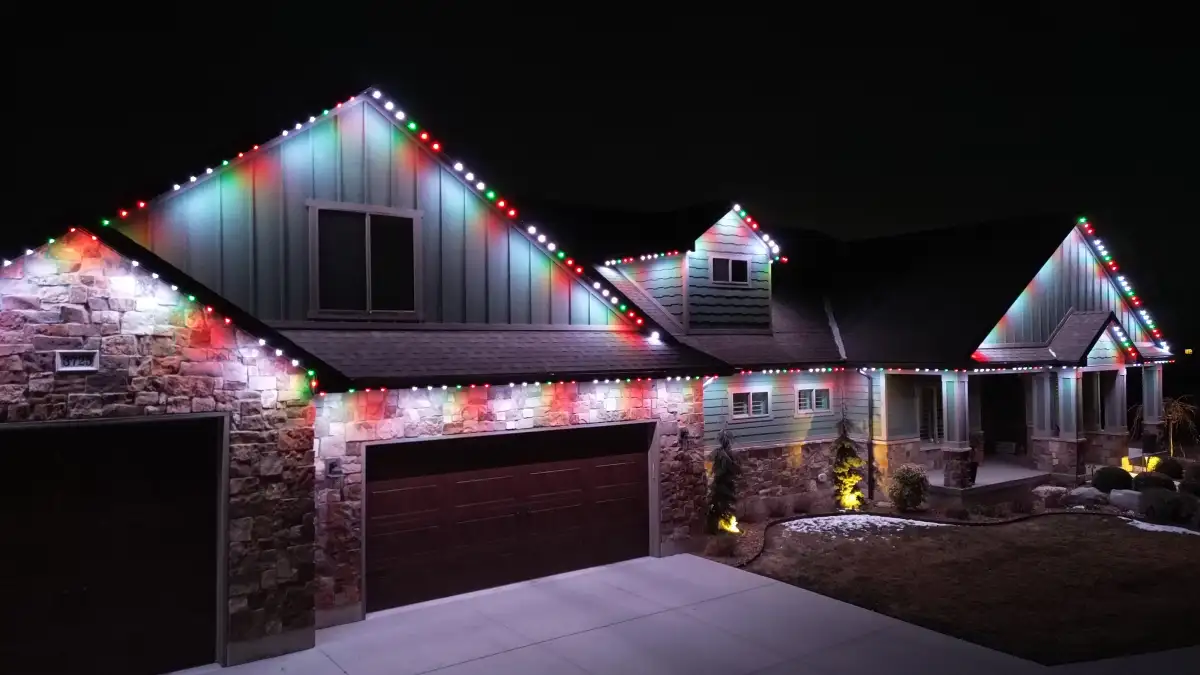
Holiday Lights Installation Without Ladders, Tangled Strands, or Guesswork
Holiday lights installation is a seasonal service for homeowners and businesses that want a polished display without spending weekends on ladders, sorting old strands, or troubleshooting outlets in cold weather. TruLight handles design, layout, mounting, power planning, takedown, and practical details that make a display look intentional.
A cleaner path to a finished seasonal display
The work is different from permanent Christmas lights because seasonal displays can include roofline strands, wreaths, garland, ground pieces, trees, columns, and commercial accents that change from year to year. Some clients want a traditional warm-white look. Others want color, symmetry, and high visibility from the street. The installation method follows the display goals.
A good seasonal installation also protects the property. Clips, cord routes, timers, and connection points should be selected so gutters, trim, landscaping, and walkways are respected. The goal is a festive display that comes down cleanly when the season ends.
Holiday displays in Camden, Columbia, Lexington, and surrounding Midlands communities often need to be visible from curved streets, long driveways, or neighborhood entrances. TruLight designs for the way the property is actually seen.
Seasonal installation details included in the plan
- Roofline measurements and display layout before installation begins.
- Clip and attachment choices suited to gutters, shingles, fascia, columns, and railings.
- Power planning that avoids overloaded circuits and messy cord paths across walkways.
- Timer or control setup so the display turns on consistently through the season.
- Takedown sequencing that protects lights, trim, and landscaping after the holidays.
- Recommendations for permanent lighting if yearly ladder work is becoming a burden.
Coordinating installation around roofline access and timing
Accurate roofline measurements and a clear display layout help determine the right amount of lighting before installation begins. Clips and attachments should suit the home's gutters, shingles, fascia, columns, and railings.
Thoughtful power routing avoids overloaded circuits and messy cords across walkways. Timers or other controls can then keep the display running consistently throughout the season.
Careful takedown protects the lights, trim, and landscaping after the holidays. If yearly ladder work has become a burden, permanent roofline lighting may be a more convenient long-term option.
What gets confirmed before lights go up
Install schedule
TruLight confirms preferred installation timing, display duration, takedown needs, and any events that require the lights to be ready before a specific date.
Access and attachment
The estimate reviews roof pitch, gutters, shingles, railings, columns, outlets, and landscape edges so lights can be mounted cleanly and removed safely.
Clean takedown plan
Seasonal lights should leave the property in good shape. TruLight plans removal, storage notes, and repeat-service details before the display goes up.
Installation details that prevent seasonal hassles
Seasonal installation begins with measurement. TruLight maps roofline runs, porch details, columns, trees, and focal points so the display can be installed efficiently instead of improvised from a box of strands.
Attachment choices protect the property. Clips, fasteners, and routes are matched to gutters, shingles, fascia, railings, and landscape features so the lights stay neat through wet and windy Midlands weather.
Power planning keeps walkways clear and helps prevent overloaded circuits. Timers or simple controls are selected so the display turns on consistently without daily adjustments.
When the season ends, takedown is part of the plan. A clean removal process protects trim, landscaping, and the lights themselves for future use.
For holiday lights installation, the final check is whether the display will be easy to live with through the whole season. That means clean power paths, dependable timing, balanced brightness, and a takedown plan that protects both the lights and the property.
Installation answers before the busy season
When should holiday light installation be scheduled?
Earlier is better, especially for larger homes and commercial displays. Scheduling before the holiday rush leaves more room for design decisions and preferred installation dates.
Do you remove the lights after the season?
Seasonal service can include takedown so the display is removed cleanly and the property returns to normal.
Can I switch to permanent lights later?
Yes. A seasonal installation can help clarify which roofline sections and display styles matter most before investing in a permanent system.
Choose between installed seasonal lights and built-in roofline color
Holiday Lighting
Review temporary or permanent holiday lighting options for homes and businesses across the Midlands.
View Service →Permanent Christmas Lights
Consider a roofline system that stays in place and changes into Christmas scenes through app control.
View Service →Holiday and Seasonal Lighting
Coordinate temporary accents and permanent color scenes for more than one event on the calendar.
View Service →Schedule a cleaner seasonal install before the rush
Tell TruLight where you want lights installed and when the display needs to be ready, and the team will recommend a clean seasonal installation plan.
Request Your Free Estimate