
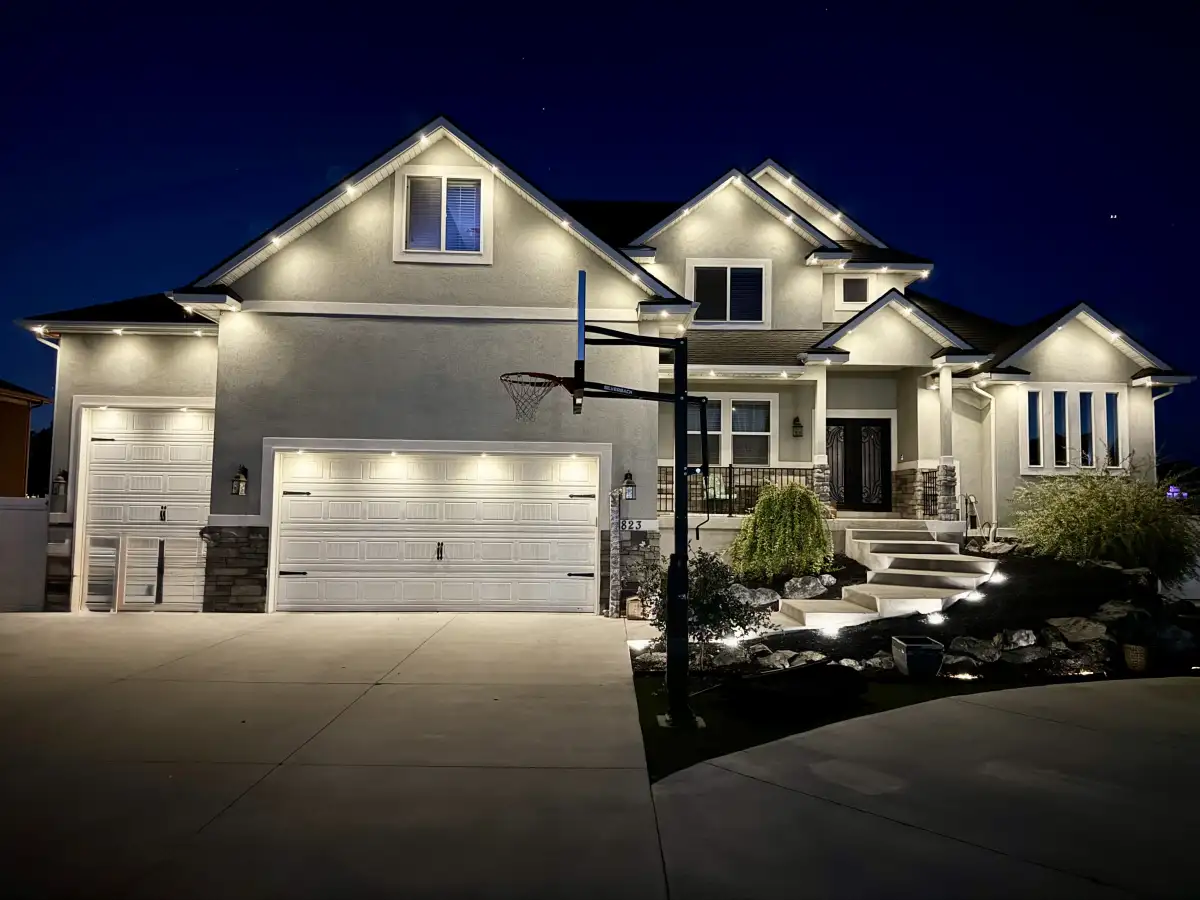
Outdoor Lighting That Connects Curb Appeal, Use, and Visibility
Outdoor lighting is the umbrella service for homeowners who know the property needs better light but have not narrowed the project to one category. The right plan may include roofline lighting, landscape accents, path lighting, patio lighting, security zones, or a small number of carefully placed fixtures that solve several issues at once.
Outdoor lighting for curb appeal and everyday use
TruLight starts this kind of project by identifying how the property is used after sunset. A front elevation may need gentle architectural light for curb appeal, while a back patio needs enough task light for cooking and conversation. A driveway may need safer arrival lighting, while a tree line or garden bed may need only subtle depth. Putting those goals in order keeps the design from becoming cluttered.
Outdoor lighting planning looks at the full property: rooflines, pathways, entries, patios, trees, driveways, and darker areas that need better visibility. The right first phase solves the most important needs while leaving room for future additions.
Homes across Camden, Columbia, Lexington, Elgin, and Chapin vary widely in setback, tree cover, architecture, and outdoor living space. That is why a useful outdoor lighting plan should never assume the same layout for every property.
Outdoor lighting priorities we sort during design
- Front elevation lighting that improves the view from the street without overpowering the home.
- Path, step, and arrival lighting for safer movement from vehicles to entrances.
- Patio, porch, and pool-area scenes that support relaxing evenings and guests.
- Landscape accents that highlight trees, beds, stone, fences, or water features.
- Security-oriented zones for side yards, driveways, gates, and service areas.
- Control choices that keep the system simple for daily use and special occasions.
Building a property-wide plan around real evening routines
Balanced outdoor lighting begins with the places you see and use most. A softly lit front elevation can improve curb appeal, while well-placed path, step, and driveway lighting makes the route from a vehicle to the door easier to navigate after dark.
Patios, porches, pools, trees, garden beds, stonework, fences, and water features each need a different level and direction of light. The goal is a layered view that supports relaxing evenings and guests without washing the property in unnecessary brightness.
Driveways, gates, side yards, and service areas can have separate security-oriented zones. Simple controls then let you run everyday scenes automatically and make quick changes for gatherings, holidays, or late arrivals.
What the outdoor lighting walkthrough covers
Evening priorities
TruLight identifies which areas need beauty, which areas need safer movement, and which areas should stay subtle. A front walk, patio, driveway, and tree line usually need different fixture types and different brightness levels.
Installation conditions
The walkthrough reviews masonry, siding, planting beds, drainage, power access, and mowing or maintenance routes so wiring and fixtures can be placed cleanly without creating service headaches later.
Layered nighttime view
The finished design should create depth from the curb and comfort up close. TruLight balances roofline accents, path lighting, landscape features, and gathering areas so the property feels finished instead of flooded.
Lighting that connects curb appeal, comfort, and safer movement
Outdoor lighting works best when the property has layers instead of one bright wash. TruLight balances roofline accents, entries, walkways, landscape features, and gathering areas so the home looks finished from the street and comfortable up close.
Movement matters as much as appearance. Steps, parking areas, porch transitions, and darker side yards are reviewed before fixture placement so guests can move naturally after sunset without harsh glare.
The plan can also leave room for future phases such as patios, cameras, gardens, fences, pool areas, or holiday scenes. Starting with a clean structure makes later additions easier to connect.
Outdoor lighting should give the property a balanced nighttime identity. The plan needs to support curb appeal, outdoor living, and safer movement without making every surface compete for attention or forcing the homeowner into complicated controls.
Outdoor Lighting questions
Where should an outdoor lighting project begin?
Start with the places people use most often after dark, then add curb appeal and accent lighting. That order keeps the system practical before it becomes decorative.
Can outdoor lighting be installed in phases?
Yes. A phased plan can prepare transformer capacity, wiring routes, and control zones so later additions do not require starting over.
What color temperature is best outside?
Warm white is usually the most comfortable for homes. Specialty color is useful for holidays and events, but everyday lighting should feel natural and restrained.
Outdoor lighting services that pair well with this plan
Outdoor Lighting Installation
Move from design priorities into fixture placement, wiring routes, controller setup, and clean installation across the property.
View Service →Residential Outdoor Lighting
Review homeowner-focused lighting for curb appeal, outdoor living, arrival routes, and safer movement after dark.
View Service →Landscape Lighting
Add depth to planting beds, trees, paths, steps, and outdoor living areas with lower-level accent lighting.
View Service →Start with a property-wide outdoor lighting plan
Request a TruLight recommendation that prioritizes curb appeal, outdoor living areas, arrival routes, and future lighting phases around the way your Midlands property is actually used after dark.
Request Your Free Estimate