
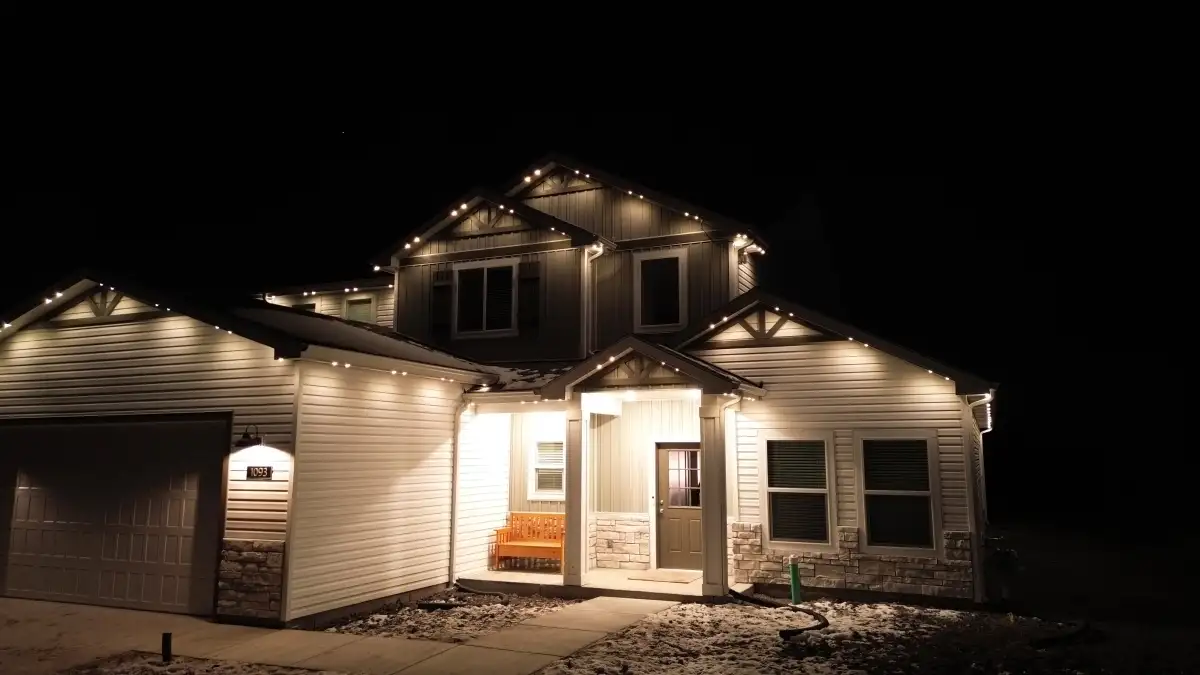
Permanent Architectural Lighting for a Finished Nighttime Exterior
Permanent architectural lighting turns exterior accent lighting into a durable installed system. Instead of placing temporary lights for occasional effect, the fixtures, wiring, controls, and mounting choices are planned so the property has a consistent nighttime presence throughout the year.
Permanent lighting for standout architectural details
The permanent aspect changes the design. TruLight considers service access, wiring concealment, controller location, fixture durability, and whether the accents should work with holiday scenes, security zones, or everyday warm-white schedules. A permanent system should look intentional both when it is on and when it is seen during the day.
Permanent architectural lighting gives the home a reliable accent system that can be used repeatedly, not a temporary effect that has to be assembled for each season or event.
Permanent architectural lighting in the Midlands must hold up to humid summers, heavy rain, pollen, insects, and changing exterior conditions. Durable components and accessible service points matter as much as the first-night look.
Permanent architectural system checkpoints
- Fixture and channel choices that complement the structure during the day and night.
- Concealed or orderly wiring routes that respect trim, masonry, soffits, and landscaping.
- Control zones for facade accents, entries, rooflines, and landscape-adjacent features.
- Default scenes that make the property look polished without constant app changes.
- Service access for fixtures, modules, transformers, and controllers after installation.
- Coordination with permanent roofline, holiday, and security lighting where useful.
Tracing the best lines of the home after dark
Fixtures and channels should complement the structure during the day as well as after dark. Concealed or orderly wiring can respect trim, masonry, soffits, and landscaping without distracting from the architecture.
Separate control zones for facade accents, entries, rooflines, and nearby landscape features make the system more flexible. A polished default scene can run on ordinary evenings without constant app changes.
Reachable fixtures, modules, transformers, and controllers make future service easier. Architectural lighting can also coordinate with permanent roofline, holiday, or security zones where a unified exterior makes sense.
What architectural planning reviews
Architectural lines
TruLight studies the rooflines, columns, gables, brick, stone, porch details, and entry features that give the home its shape after dark.
Permanent routing
The estimate reviews concealed wiring paths, mounting surfaces, service access, controller locations, and trim coordination so the system looks deliberate when it is off as well as on.
Long-term scenes
Default warm-white settings, accent zones, holiday color options, and future expansion points are planned before installation so the system can stay useful year after year.
Architectural lighting that looks intentional day and night
Permanent architectural lighting has to respect the home when the lights are off, not just when scenes are running. TruLight reviews trim lines, soffits, masonry, roof edges, and landscape transitions so fixtures and channels support the architecture instead of competing with it.
Control zones are planned around how the property is seen: the front elevation from the street, the entry from the driveway, outdoor living areas from inside the home, and accent features that deserve a quieter glow. That keeps everyday scenes polished and holiday scenes easier to manage.
Concealed routing, durable mounting, and service access are reviewed before installation begins. The finished system should feel permanent in the best sense: clean, reliable, and easy to use across normal nights, events, and seasonal color changes.
Permanent architectural lighting has to keep a finished look over time. Service access, concealed routing, durable fixtures, and practical scene control protect the design after the first night.
Permanent Architectural Lighting questions
Can permanent architectural lighting include color?
Yes, but most properties benefit from a warm-white default with color used selectively for events or holidays.
Will wiring be visible?
The goal is clean routing and concealment where practical. The exact method depends on the exterior materials and fixture locations.
Can it be added to an existing lighting system?
Often, yes. TruLight can evaluate current transformers, controls, and fixture locations before recommending additions.
Permanent lighting options for architectural impact
Architectural Lighting
Explore lighting that emphasizes rooflines, columns, brick, stone, and the strongest architectural features after dark.
View Service →Permanent Outdoor Lighting
Plan a permanent LED system for everyday curb appeal, holiday scenes, and smart control from one installation.
View Service →Permanent Lighting
Start with permanent roofline lighting for Camden and Midlands homes that need year-round color and control.
View Service →Give your exterior a finished nighttime presence
Request a permanent architectural lighting plan that respects the structure, hides the installation cleanly, and creates warm, controlled scenes for everyday curb appeal and seasonal color.
Request Your Free Estimate