
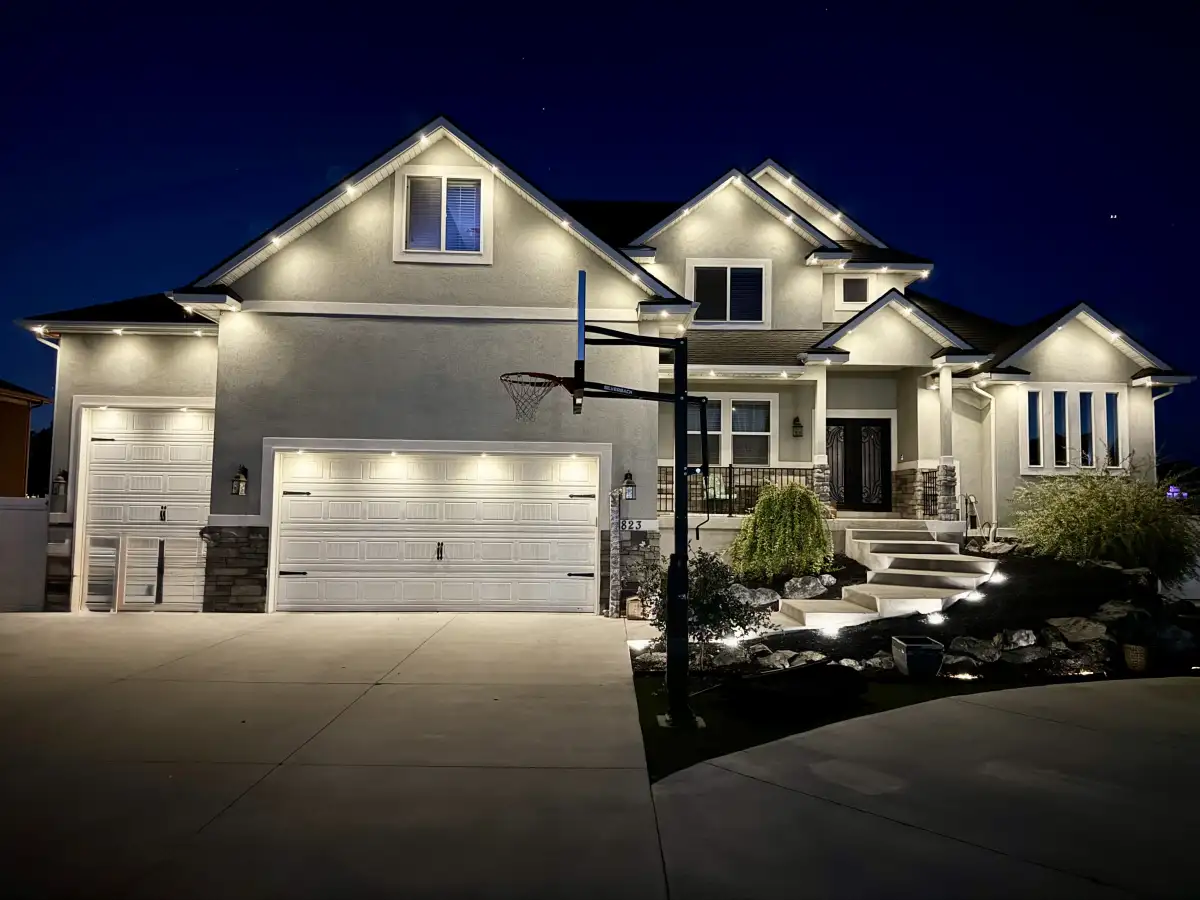
Residential Outdoor Lighting Planned Around Daily Home Life
Residential outdoor lighting is less about showing every feature at once and more about making a home feel finished, welcoming, and easy to live with after dark. A good design supports arrivals, porch use, backyard time, pet routines, guests, and the way the family actually moves around the property.
Residential lighting for everyday curb appeal and outdoor living
For a home, the details are personal. One family may want a quiet warm glow on the front elevation and safe steps near the garage. Another may want programmable color for football weekends, pool parties, and holidays. Another may need a low-maintenance alternative to climbing ladders every December. TruLight narrows those goals before recommending equipment.
Residential outdoor lighting should feel comfortable on ordinary weeknights as well as special occasions. The plan accounts for neighbors, bedroom windows, children, pets, driveways, patios, HOA expectations, and everyday routines.
Residential properties in the Midlands include brick ranch homes, newer subdivisions, lake-area homes, historic Camden houses, and larger rural lots. Each setting calls for a different balance of subtlety, durability, and control.
Residential design details worth getting right
- Comfortable brightness near doors, porches, walkways, and steps without harsh glare.
- Roofline or architectural lighting that follows the home cleanly instead of looking temporary.
- Backyard scenes for cooking, seating, fire pits, pool areas, and quiet evenings.
- Simple app or schedule control that does not require constant adjustment.
- Fixture placement that respects neighbors, bedroom windows, and the view from inside.
- Durable materials and wiring routes planned for South Carolina weather and maintenance.
Planning around family routines, entries, and gathering spaces
Doors, porches, walkways, and steps need comfortable brightness without harsh glare. Roofline and architectural lighting should follow the home cleanly so it looks permanent rather than temporarily attached.
Backyard scenes can support cooking, seating, fire pits, pools, and quiet evenings with different levels of light. Simple app controls and schedules keep those scenes useful without constant adjustment.
Fixture placement should respect neighbors, bedroom windows, and views from inside the home. Durable materials and protected wiring routes help the system stand up to South Carolina weather and routine yard maintenance.
What the home lighting walkthrough checks
Family routines
TruLight asks about arrivals, pets, guests, children, backyard use, and quiet evenings so lighting supports real daily movement.
Neighbor-aware aiming
The estimate reviews bedroom windows, property lines, driveway views, and nearby homes so useful light stays controlled.
Outdoor living zones
Porches, patios, pool areas, fire pits, grills, and side yards are planned separately because each space needs a different level of light.
Residential lighting planned around how the home is lived in
Residential outdoor lighting should make the home easier to use. TruLight starts with the places people move most often: doors, steps, porches, garages, side yards, and backyard gathering areas.
Comfort matters. Shielded fixtures, lower output, and careful aiming can improve safety and curb appeal without shining into bedrooms or neighboring properties.
Backyard lighting is planned differently than roofline lighting. Cooking areas, seating, fire pits, pools, and play spaces each need their own balance of visibility and atmosphere.
Controls should stay simple enough for everyday use, whether the homeowner wants a basic schedule, app scenes, or permanent lighting that also handles holiday color.
For residential outdoor lighting, the final check is comfort. The plan should look good from the street, feel pleasant from the porch or patio, respect nearby homes, and match the household routine rather than creating a display that only works for special occasions.
Residential Outdoor Lighting questions
Will the lighting bother neighbors?
The design can use shielded fixtures, lower output, and tighter aiming to keep light on the home and yard. Good residential lighting should feel controlled, not intrusive.
Can one system handle everyday and holiday lighting?
A permanent roofline or architectural system can provide everyday warm white and also switch to color scenes for holidays or events.
Do I need to know exactly what I want before calling?
No. The consultation is meant to turn broad goals such as safer steps, better curb appeal, or easier holiday lighting into a clear plan.
Residential lighting services to compare
Outdoor Lighting
See broader exterior lighting options for entries, pathways, patios, driveways, and curb appeal across the property.
View Service →Permanent House Lights
Add built-in roofline lighting for warm-white evenings, birthdays, holidays, and neighborhood events.
View Service →Permanent Christmas Lights
Replace annual roofline ladder work with saved Christmas scenes on a discreet permanent system.
View Service →Plan residential outdoor lighting for your Midlands property
Request a residential lighting estimate that accounts for arrivals, curb appeal, outdoor living, neighbor comfort, and the way your household uses the property.
Request Your Free Estimate