
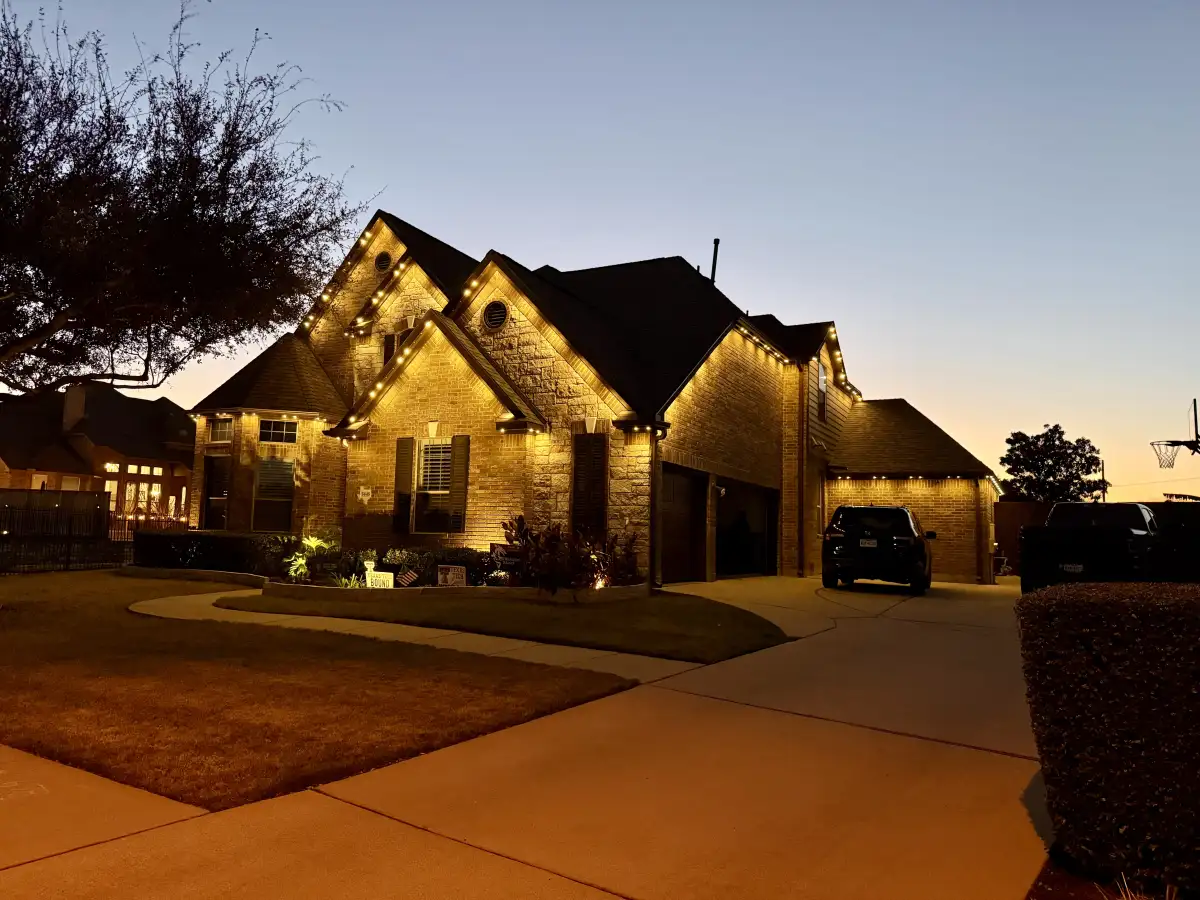
Permanent Outdoor Lighting for Everyday Use and Seasonal Flexibility
Permanent outdoor lighting is a year-round exterior system that stays in place, looks clean on the structure, and can change purpose as the calendar changes. It can provide warm architectural light on normal evenings, team colors on game day, holiday scenes in December, and brighter visibility when guests arrive or the driveway is active.
Year-round outdoor lighting with clean roofline control
The key design question is permanence. Wiring routes, mounting channels, controllers, and service access need to be planned so the system looks intentional after the installer leaves. TruLight evaluates roofline shape, fascia depth, outlet locations, controller placement, Wi-Fi reach, and the way the lights will appear from the street before specifying the layout.
This service differs from LED outdoor lighting because the emphasis is not only on efficient light output. It is about a complete installed system that replaces recurring temporary setups and becomes part of the home's exterior function.
Homes in Camden, Columbia, Lexington, and Chapin often have different trim depths, gable shapes, and porch styles. Permanent outdoor lighting should be measured and planned on site so the finished lines follow the architecture cleanly.
Permanent system planning points
- Clean channel or mounting placement that blends with trim and roofline geometry.
- Controller locations that are protected, reachable, and close enough to reliable signal.
- Default warm-white scenes for ordinary nights so the system does not feel seasonal only.
- Holiday, event, and accent scenes organized so they are easy to find in the app.
- Electrical planning that avoids exposed cords, overloaded outlets, and awkward extension routes.
- Future service access for modules, connections, and controllers without disrupting the whole home.
Designing permanent lighting for daily and seasonal scenes
Low-profile channel and careful mounting help permanent lights follow the roofline cleanly and blend with the home during the day. The controller should be protected, reachable for service, and positioned for dependable app control.
Warm-white scenes keep the system useful on ordinary evenings, while clearly named holiday, event, and accent scenes make color changes quick when an occasion calls for them.
A clean installation avoids exposed cords, overloaded outlets, and awkward extension routes. Reachable modules, connections, and controllers also make future maintenance or additions less disruptive.
What TruLight checks before quoting
Daily curb appeal
TruLight starts with the normal evening look: warm-white roofline or accent lighting that feels finished without looking like a holiday display.
Controller placement
The estimate identifies protected controller locations, signal needs, and power access before permanent channels or fixtures are installed.
Scene organization
Holiday colors, party settings, and everyday schedules are grouped so the homeowner can find the right scene quickly in the app.
Designing a permanent outdoor system for real use
Permanent outdoor lighting should look natural on a normal weeknight. TruLight selects mounting locations and default brightness so the system supports the home instead of calling attention to the equipment.
Controls are planned before installation because a hard-to-reach controller or weak signal can make an otherwise clean system frustrating. The walkthrough confirms those details early.
Scene design is part of the project. Everyday warm white, Christmas color, patriotic scenes, and special-event settings should be easy to understand and easy to adjust.
Service access also matters. TruLight considers how modules, connections, and controllers can be reached later without disturbing the whole exterior.
For permanent outdoor lighting, the final check is whether the system feels permanent in the right way: clean during the day, flexible at night, easy to control, and serviceable without treating the original installation as disposable.
Permanent Outdoor Lighting questions
Can permanent outdoor lighting look normal most nights?
Yes. Most homeowners use a warm-white scene for regular evenings and reserve color scenes for holidays, games, birthdays, and events.
Is the system visible during the day?
A careful installation uses trim-matched channels and clean routing so the system is discreet from normal viewing distances.
Does permanent mean impossible to service?
No. A good installation allows access to controllers, connections, and individual light sections when maintenance is needed.
Permanent outdoor lighting related services
LED Outdoor Lighting
Compare efficient LED options for rooflines, entries, landscapes, pathways, and outdoor living spaces.
View Service →Permanent House Lights
Review house-mounted lighting for rooflines, porches, garages, holidays, and low-key evening scenes.
View Service →Permanent Architectural Lighting
Add a more architectural layer for brick, columns, gables, trim, and other details that define the home after dark.
View Service →Plan permanent outdoor lighting for your Midlands property
Ask TruLight to evaluate rooflines, entries, power, controls, and everyday scene goals before choosing a permanent outdoor lighting layout.
Request Your Free Estimate