
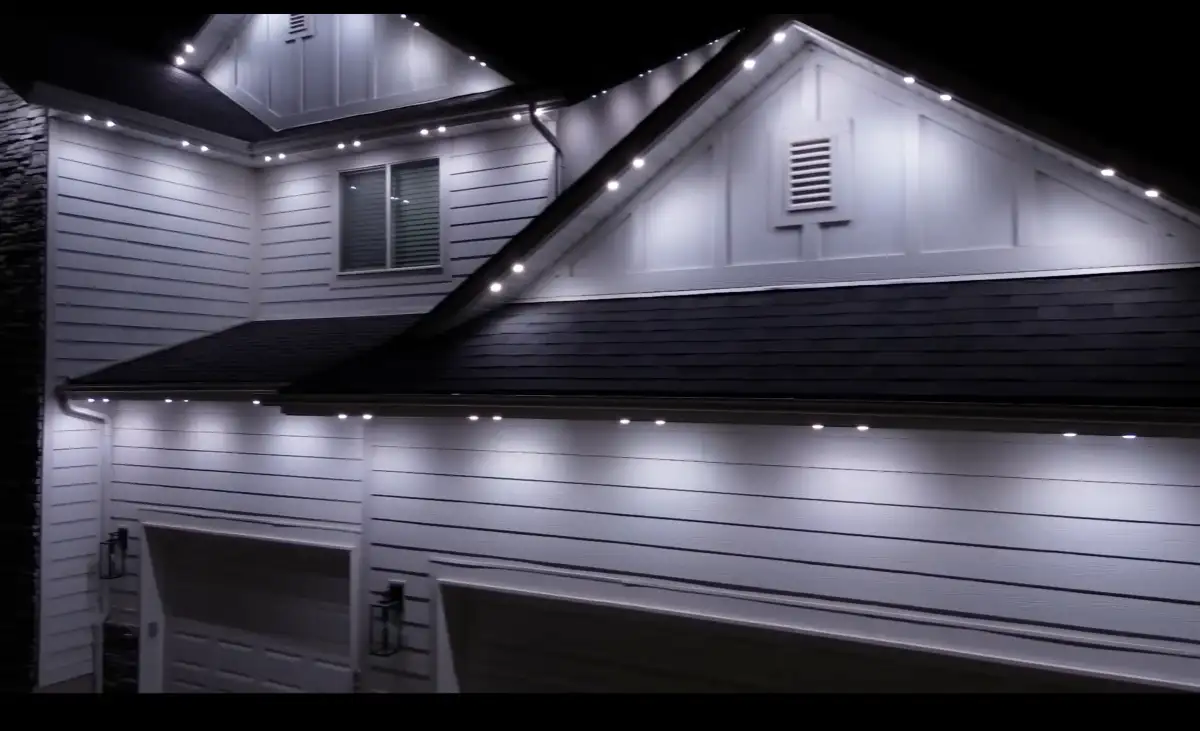
Smart Home Outdoor Lighting Connected to the Way You Already Control the House
Smart home outdoor lighting is for homeowners who want exterior lights to work with the technology they already use. That may include app control, voice assistants, cameras, doorbells, schedules, scenes, and routines that respond when people arrive, leave, or trigger motion outside.
Smart outdoor lighting that fits the home routine
The design starts with compatibility and reliability. Outdoor controls have to work through walls, exterior materials, distance, and weather. TruLight reviews Wi-Fi reach, controller placement, zone needs, and how many people in the home need access. A smart system should not depend on one phone or one confusing app screen.
Smart home outdoor lighting connects exterior scenes, schedules, and controls with the way the household already manages technology, whether the priority is convenience, consistency, or remote access.
Midlands homes can have detached garages, long driveways, thick brick walls, metal outbuildings, and backyard structures that complicate signal reach. Smart outdoor lighting should be planned with those real conditions in mind.
Smart home planning checkpoints
- Controller placement with enough signal strength for reliable daily operation.
- Scene names and app organization that make sense to everyone in the household.
- Camera and doorbell coordination so lighting improves nighttime alerts and footage.
- Voice or routine options where they are useful, without making simple actions harder.
- Guest, travel, and holiday settings that can be changed without rewiring anything.
- Fallback control options for times when phones, apps, or internet service are unavailable.
Connecting scenes, schedules, and zones without overcomplication
Reliable smart lighting starts with a controller location that has dependable signal strength. Clear scene names and simple app organization also make the system easier for everyone in the household to use.
Lighting can coordinate with cameras and doorbells to improve nighttime alerts and footage. Voice commands and routines can be added where they save time without making basic on-and-off control harder.
Guest, travel, and holiday settings can change without rewiring the system, and a practical fallback keeps essential control available if a phone, app, or internet connection is temporarily unavailable.
What smart-control planning includes
Connected routines
TruLight reviews how the household already uses apps, voice assistants, doorbells, and cameras so lighting routines feel familiar.
Signal and controls
The estimate checks controller placement, Wi-Fi or mesh coverage, fallback control options, and areas where outdoor conditions can affect reliability.
Household-friendly scenes
Scene names, schedules, and brightness levels are organized so everyone can use the system without needing a technical walkthrough later.
Smart outdoor lighting that stays easy for the whole household
Smart-home outdoor lighting should reduce effort, not create another system the homeowner has to manage every night. TruLight starts by identifying the routines that matter: arrival lighting, quiet evening scenes, patio use, camera support, vacation schedules, holiday colors, and basic dusk-to-bedtime operation. Those routines guide the controls so the most common actions stay simple.
Reliability is planned before features are promised. Outdoor controllers may sit behind brick, metal, thick walls, long driveways, detached garages, or backyard structures where signal strength changes. TruLight reviews controller location, Wi-Fi or mesh coverage, power access, and zone distance before finalizing equipment. A dependable warm-white scene is more valuable than a complicated routine that only works some of the time.
Smart integration is most useful when it improves real behavior around the home. Lighting may coordinate with cameras and doorbells so nighttime footage is clearer, or it may connect with voice assistants for simple porch and patio commands. Travel scenes can make the property look occupied, while guest scenes can brighten the route from the driveway to the door. The system should still allow quick app control when the homeowner wants a manual change.
Household access is another important detail. If only one person knows where scenes live, the lighting becomes fragile. TruLight organizes names, zones, schedules, and favorite scenes so family members can understand the system. Basic fallback options are also discussed so the property is not dependent on one phone, one login, or one internet connection for every exterior lighting need.
The best smart-home lighting plans also avoid automating every possible action. A driveway may need a reliable arrival scene, while a patio may need a few simple brightness settings. Security zones may benefit from motion behavior, but decorative roofline scenes may work better on predictable schedules. TruLight keeps automation tied to the zone's purpose so the system feels convenient instead of noisy, complicated, or distracting.
A strong smart-home lighting setup feels calm after installation. The controls match the household, the outdoor signal path has been considered, camera and arrival routines have a clear purpose, and the owner can use the system without turning every evening into a technical task.
Smart Home Outdoor Lighting questions
Can smart outdoor lighting work with cameras?
Often, yes. Lighting can be placed and programmed to support camera views, motion alerts, and clearer nighttime video.
Do I need a full smart home system?
No. Many homeowners start with lighting app control and add broader integration only where it provides real value.
What happens if the internet is down?
System behavior depends on the equipment, but schedules and local controls can often continue. TruLight discusses fallback options during planning.
Connected outdoor lighting services
Outdoor Lighting Automation
Use schedules, timers, and app scenes to keep exterior lighting consistent without daily adjustments.
View Service →Smart Outdoor Lighting
Start with phone-based control for outdoor zones, then add broader smart-home routines where they help.
View Service →Outdoor Security Lighting
Focus on visibility around entries, garages, driveways, side yards, and other areas that need better nighttime coverage.
View Service →Plan smart home outdoor lighting for your Midlands property
Ask TruLight to review your outdoor zones, control preferences, cameras, and household routines before choosing a smart-home lighting setup.
Request Your Free Estimate